
You’ve been there. It’s 11:30 PM, the house is quiet, and you’re standing in the kitchen light, fork in hand. You’re not eating junk food—it’s just a “healthy” salad or a bowl of Greek yogurt. But your body doesn’t care about the quality of the calories right now; it only cares about the clock. This is the core principle of Chrononutrition, a revolutionary field of science that suggests when you eat is just as critical as what you eat.
We have spent decades obsessing over macronutrients and calorie counts, treating our bodies like simple bank accounts. But biology is not a bank; it is a clock. By ignoring the temporal rhythm of our metabolism, we are effectively giving our bodies “metabolic jetlag” without ever stepping on a plane. The solution isn’t another restrictive fad, but a return to our biological roots: the Circadian Diet.
The Biology of Time: Understanding Your Internal Clock
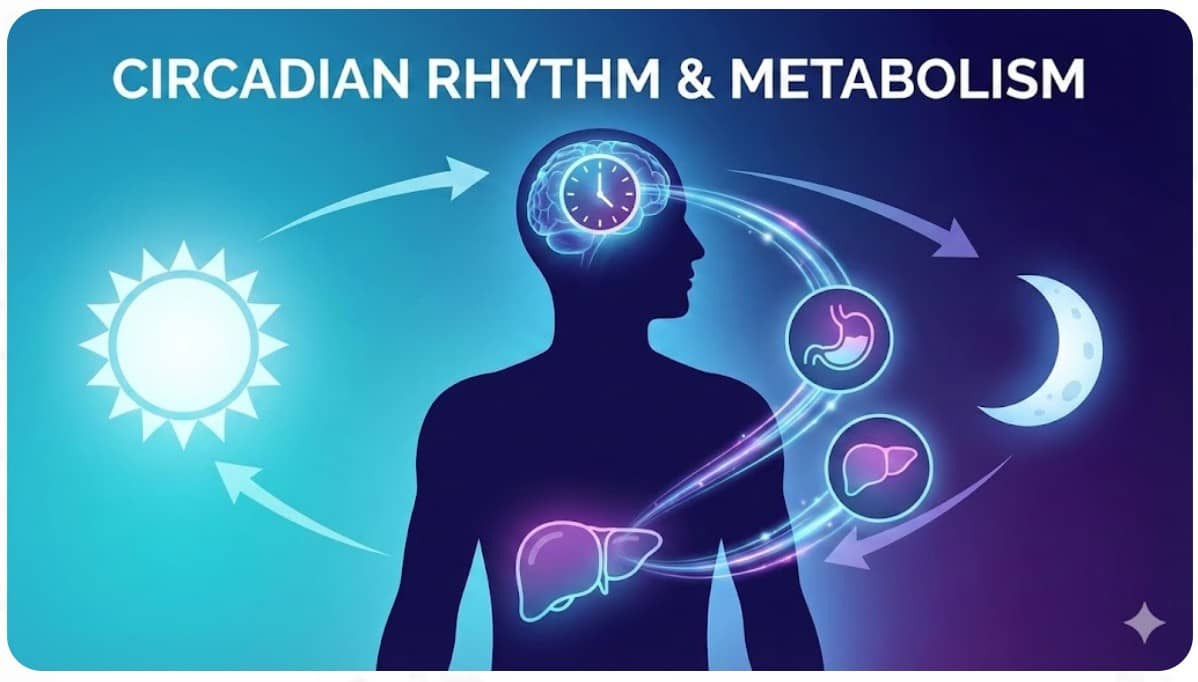
Deep inside your brain, a tiny region called the suprachiasmatic nucleus (SCN) acts as the conductor for your body’s orchestra. It uses light to tell your brain when to wake up and when to sleep. However, your liver, gut, and pancreas have their own conductors—peripheral clocks—and they don’t care about sunlight. They care about food.
When you eat late at night, you send a conflicting signal. Your brain sees darkness and preps for sleep, but your gut sees food and preps for work. This misalignment is the enemy of metabolic health. Chrononutrition is the art of synchronizing these two clocks, ensuring your digestion and your sleep cycle are playing the same song.
The Core Pillars of a Circadian Diet
To master this approach, we don’t need a calculator; we need a schedule.
Front-Loading Your Calories
Grandma was right when she said to “Eat breakfast like a King, lunch like a Prince, and dinner like a Pauper.” Research consistently shows that insulin sensitivity is highest in the morning and plummets in the evening. A bagel eaten at 8 AM is metabolized efficiently, while that same bagel at 10 PM lingers in your bloodstream, inviting fat storage. Meal timing is the lever that controls this efficiency.
The Melatonin-Insulin Conflict
Here is a mechanism that sounds like science fiction but is purely biological fact. As the sun sets, your body produces melatonin to induce sleep. Surprisingly, melatonin communicates directly with your pancreas to shut down insulin production. If you eat a heavy meal while melatonin is rising, your body essentially has no place to put the sugar. This is the melatonin-insulin conflict, and avoiding it is the golden rule of the Circadian Diet. This melatonin-insulin conflict is just one reason why timing matters so profoundly. If you want to implement these principles as a full daily system — covering light, food, movement, and sleep together — our complete circadian health reset protocol maps out exactly how to do it.
Consistency is Key
Your body loves a routine. Erratic eating patterns stress your system just as much as erratic sleeping patterns. By keeping your eating window consistent, you train your hunger hormones (ghrelin) to spike only when you are actually ready to receive fuel.
Benefits Beyond the Scale
While weight loss is a common side effect, the true power of Chrononutrition lies in longevity and performance.
- Metabolic Flexibility: When you stop grazing 16 hours a day, your body remembers how to burn stored fat for fuel.
- Deep Restoration: Digestion is an energy-intensive process. By finishing your last meal early, your body can divert energy during sleep toward cellular repair and “taking out the trash” (autophagy) rather than digesting that late-night snack.
- Cardiovascular Health: Aligning your meals with your circadian rhythm has been linked to better blood pressure regulation and reduced inflammation markers.
Actionable Guide: Building Your Routine
Ready to reset your clock? You don’t need to be perfect; you just need to be strategic.
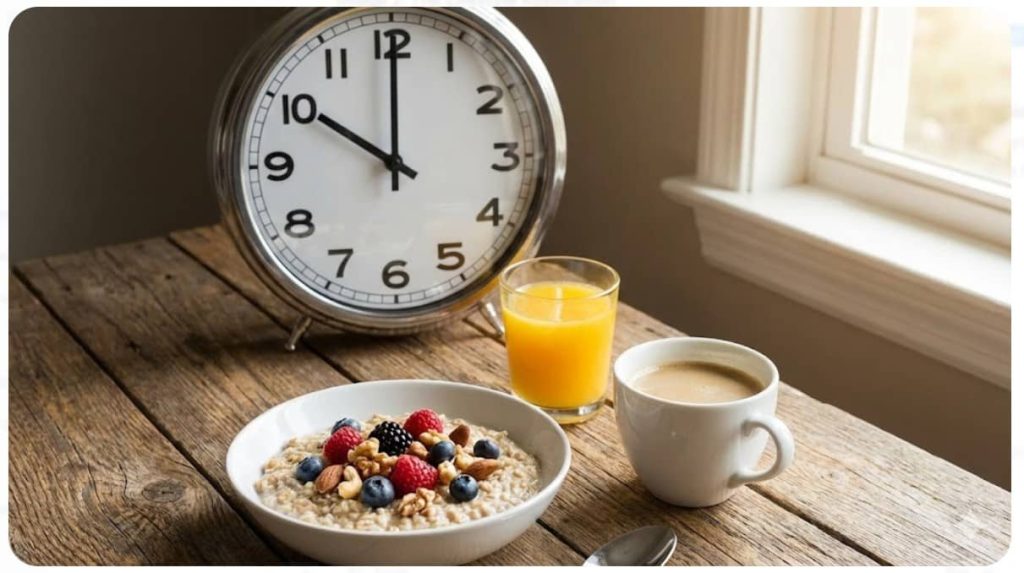
- Define Your Window: Aim for a 10 to 12-hour eating window. If you have breakfast at 8 AM, finish dinner by 6 PM or 8 PM at the latest.
- The Sunlight Sandwich: Try to view natural light before your first meal and avoid blue light during your last meal. This anchors your internal clock firmly to the solar day.
- The 3-Hour Rule: Stop eating at least three hours before bed. This simple buffer allows your insulin levels to drop before melatonin takes the stage.
That evening rhythm matters more than most people think. Our breakdown of how meal timing shapes your metabolic health shows why what you do in the hours before bed sets up the night that follows.
The Future of Nutrition
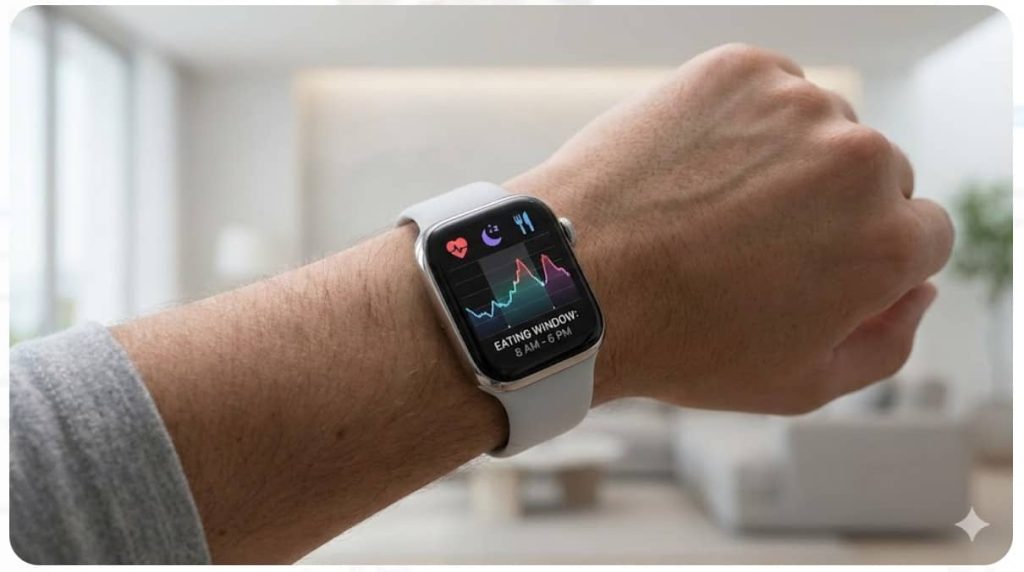
We are entering an era where generic dietary advice is becoming obsolete. The future is personalized. Wearable tech is already evolving to track not just our steps, but our “chronotypes”—whether we are night owls or early birds—and suggesting the optimal meal timing for our unique physiology. Chrononutrition is not a fleeting trend; it is the future operating system of preventative medicine. What you eat and when you eat it does not just affect your metabolism — it directly shapes your gut microbiome and sleep quality that same night. The two systems share more biology than most people realise.
Sync Your Clock, Heal Your Metabolism
You don’t have to overhaul your entire life tomorrow. Start small. Push your breakfast back an hour, or pull your dinner forward. Listen to your body as it shifts from a state of constant digestion to a state of rhythmic flow. By honoring your circadian rhythm, you aren’t just losing weight; you are finally working with your biology instead of against it.